Before beginning this exercise, I studied some different lighting effects, using a single light source.
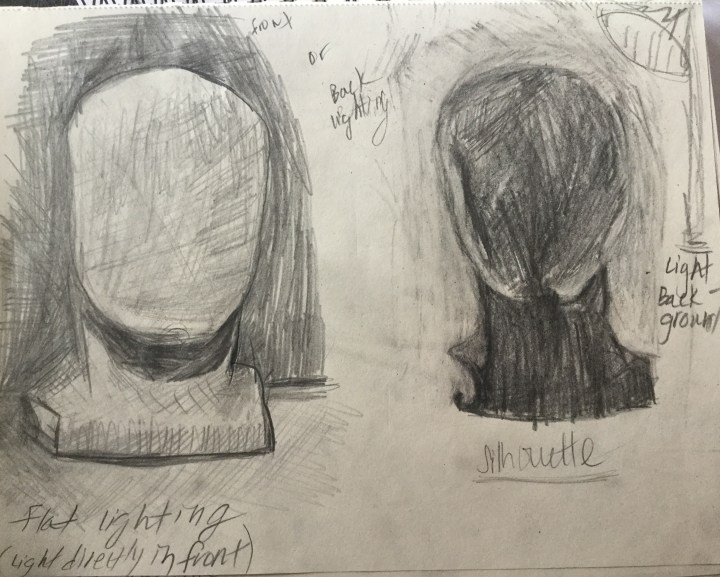
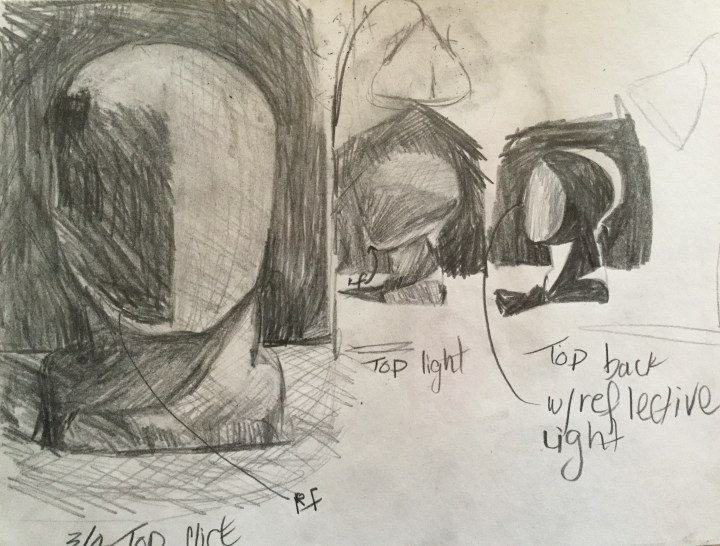
I had my sitter return to previous position (sketched in the first exercise). I created a small study of washes and outlined his shape in diluted paint.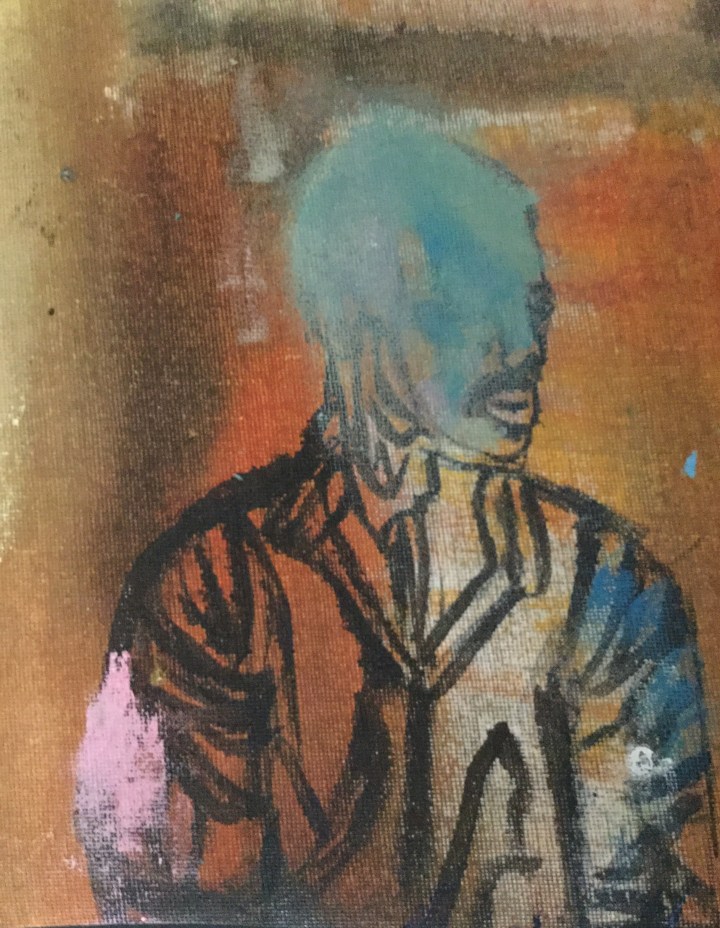
I then began working on larger canvas using a diluted mix of raw umber and OMS. I blocked in the background loosely. I blocked in the darker areas with an even darker raw umber. I dry brushed in the shadow lines. I diluted the umber a bit and filled in the shadows. I used flake white to block in the lightest areas. I marked the position of my sitter and took a break. In the following session, I prepared a greyscale of eight values. I found in the end that it was far too many, and my eyes were strained trying to discern between them. I referenced my previous greyscale done in acrylic, in the first section of our textbook, to create equal values in this oil mixture. This time I added a bit of cadmium red to the blue/ yellow base, to increase the warmth, and created successive values with additions of flake white. I couldn’t achieve enough distinction using flake white, so I switched to titanium white. Four values alone would have been enough. I started with the lightest areas first, then worked my way through the mid-tones to the darkest values. I went back and re-established darkest darks and lightest lights. I then added some gestural marks. During this process, I lost the form and proportions of my work a bit. I also lost my model and to utilize photos to reference shadows and light.
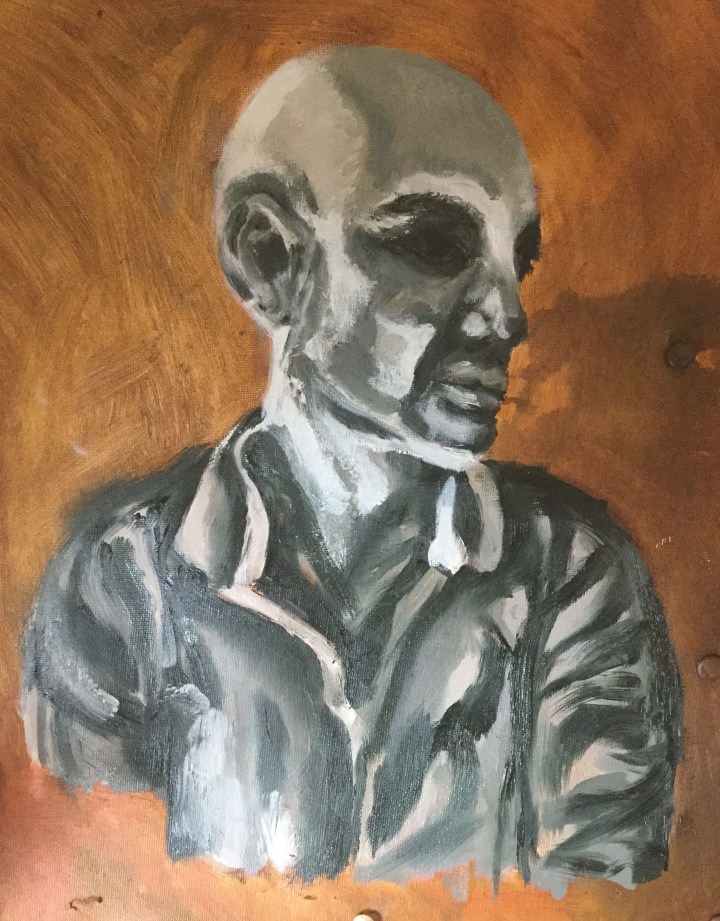
I like the contrast between the warm background and cool subject. Like every painting, it still feels incomplete, but I have to move on to other exercises.
 Creative Arts