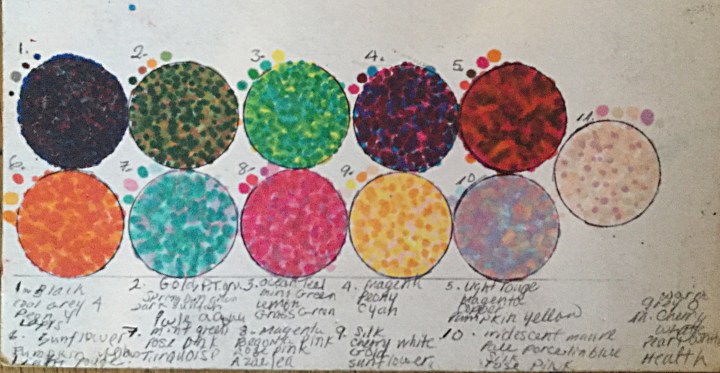
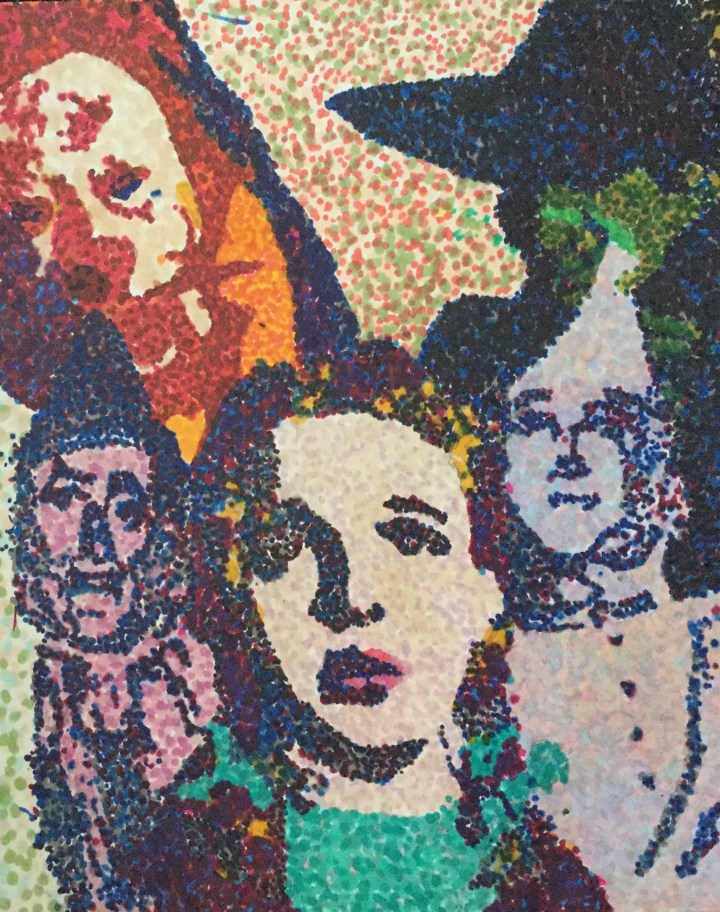
“Still Life Paintings” research point 2, Pg 57

Dutch Still Life Paintings

17th-century Dutch painters strived to capture images as realistically and truthfully as possible. They served as record keepers of all the land, gardens, horticulture and everyday scenes that ordinary person perceived during the „Golden Age”. These artists were attentive to spatial relations, and lighting to achieve a three-dimensional effect on a two-dimensional surface.

Haarlem

Was a significant art centre in 17th century Holland. Many artists emigrated there either because of their Protestant beliefs or because of the poor economic climate of Flanders. Haarlem was flourishing in commercial prosperity and Dutch affluence. These economic improvements provoked the rise of a prosperous middle class. Most still lifes at this time (considered at the lower end of the hierarchy of Dutch realism painting) were representative and intended for the flourishing middle class, who intern purchased them. One Belgium artist, Peter Claesz (1597-1661) made his name as a renowned artist there.


koller-oldmasters-still-life
Still life with smoker’s requisites, a large pewter flagon, a stoneware pitcher on its side, a beer glass and a herring, Peter Claesz (1597-1661)


In this still life and many others that came from Haarlem, the composition contains items that were once precious, but now easily attainable due to the growing wealth of this socio-economic class.

 18th Century Still Lifes

people had grown tired of floral and food still life paintings and preferred to purchase instead porcelain, wallpaper, and wood carved furniture with those symbols. Paintings of actual figures became of more interest.

19th Century Still Lifes

In the 19th century, photography had was invented, and there was no longer desire to create photo-realistic looking paintings. Dutch Still Lifes were reinvigorated by the new techniques of the impressionist and post-impressionists. With the development of colour theory and scientific principals of optical perception; artists began to experiment with colour, shapes, tone and the way paint was applied to canvas. Paris became the new art centre for these less traditional painters. They began to create to create pieces which were beautiful in themselves – not because of what they meant. One artist, in particular, was responsible for raising Still life art to a respectable status; Paul Cézanne.

Here he uses a full range of complementary colours and visible brush strokes


SL-cezanne-pear
Fruit Still life, Paul Cézanne (1880-1890)


Floral Still Life

My favourite floral still lifes from the 19th century Dutch Artists were by Vincent Van Gogh.
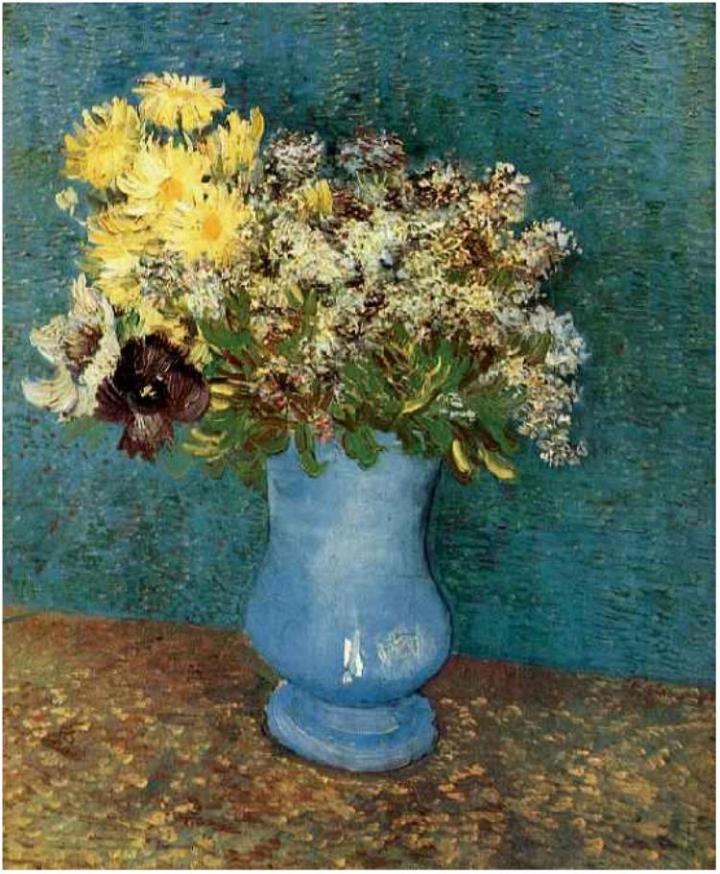


Vase-with-Lilacs,-Daisies-and-Anemones
„Vase with Lilacs, Daisies, Anemones“Vincent Van Gogh Paris, Summer, 1887

This piece by Van Gogh was created during a time when the artist had no money, and could no longer pay for models for his figure painting. Thus he began a series of colour studies in flower paintings. It was a turning point for him, as he moved away from his darker paintings and became interested in more colourful works of the Impressionists. He sought oppositions of blue with orange, red and green, yellow and violet. In 1887 he wrote, „I painted almost nothing but flowers to accustom myself to a colour other than grey, that’s to say pink, soft or bright green, light blue, violet, yellow, orange, fine red.” These paintings also reflected emotional transitions, as he went through bouts of mental illness and then regained a sense of clarity and optimism.

I am attracted by the contrast of colours (red against green) and warm and cool tones. It gives me the sense of hopefulness, the shades of yellow, gold, brown-red are uplifting. There seems to be one single lilac in the vase (also seen in other floral still lifes of Van Gogh). Later, during Van Gogh’s stay in an asylum, he painted an entire bush of lilacs. I wondered if the single lilac seen previously, foretold some mental calamity to come. Though the painting overall seems hopeful and uplifting, there the lilac presents a seed of darkness. I also admire the broken colour, small brush strokes, dashes, and dots that give the painting a lifelike texture. I created a study of this painting, trying to replicate the same colours and techniques with oil pastels. I researched both impressionism and divisionism painting techniques to gain a better understanding of how he achieved this. My results weren’t bad, though it was harder to layer colours in oil pastels than oil paints would have been, as the paper quickly became overloaded with pigment. In the future, I would like to attempt this again, with actual brush strokes.

If I repeat any impression style still lifes again with oil pastel or watercolour, I will outline the basic shapes in a dark tone, but begin blocking in the colours working from light to dark.
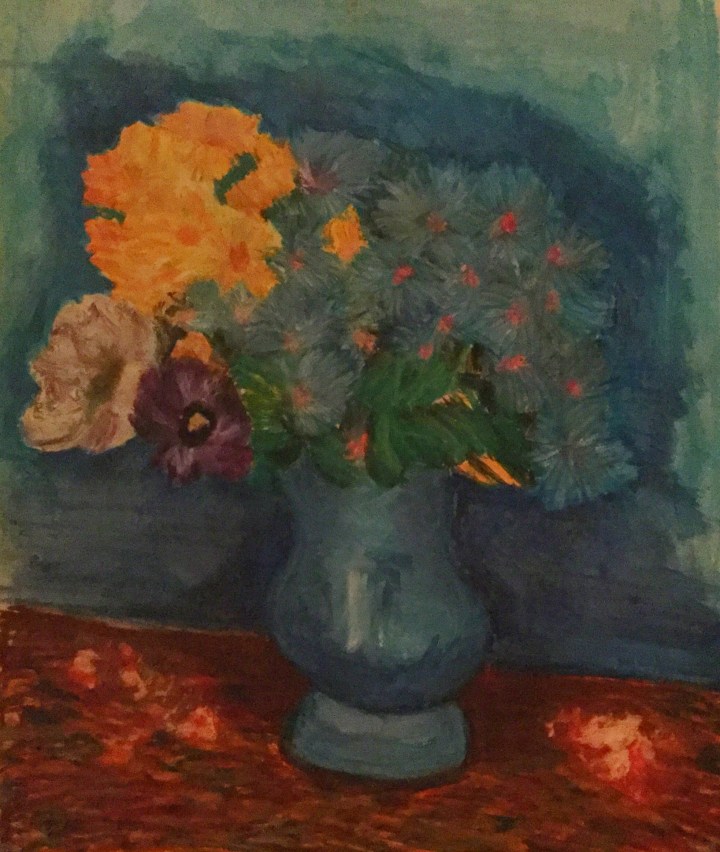


van gogh still life
My pastel study of Van Gogh’s still life

20th Century Still Life Development

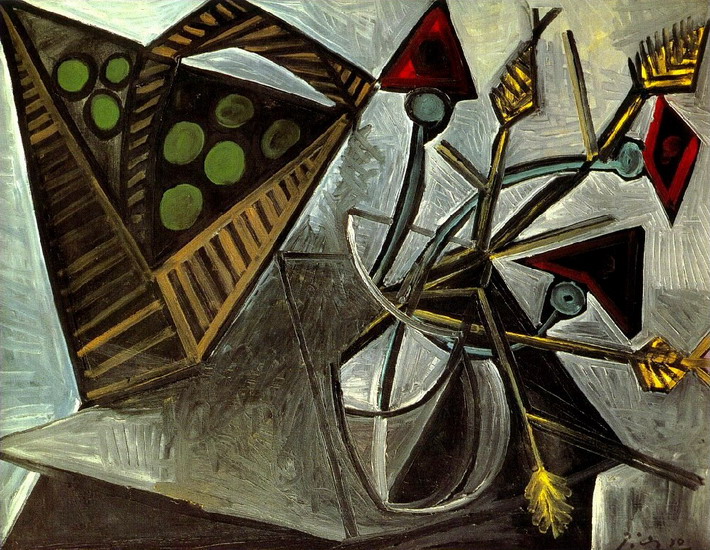
Along came Picasso and Baroque who invented „Cubism“, and once more still life gained interest. Perhaps they were trying to find a new way of expressing the same thing.

While there’s a lot to be gained from studying the great masters in regards to colour, form, tone and perspective; I am growing weary from still lifes of flowers, fruit and tableware – whether in dots, cubes, bubbles or realism. I look forward to studying later movements.


1530
„Still life of a basket of fruit“, Picasso (c. 1910-1912)


Present Day Still Life

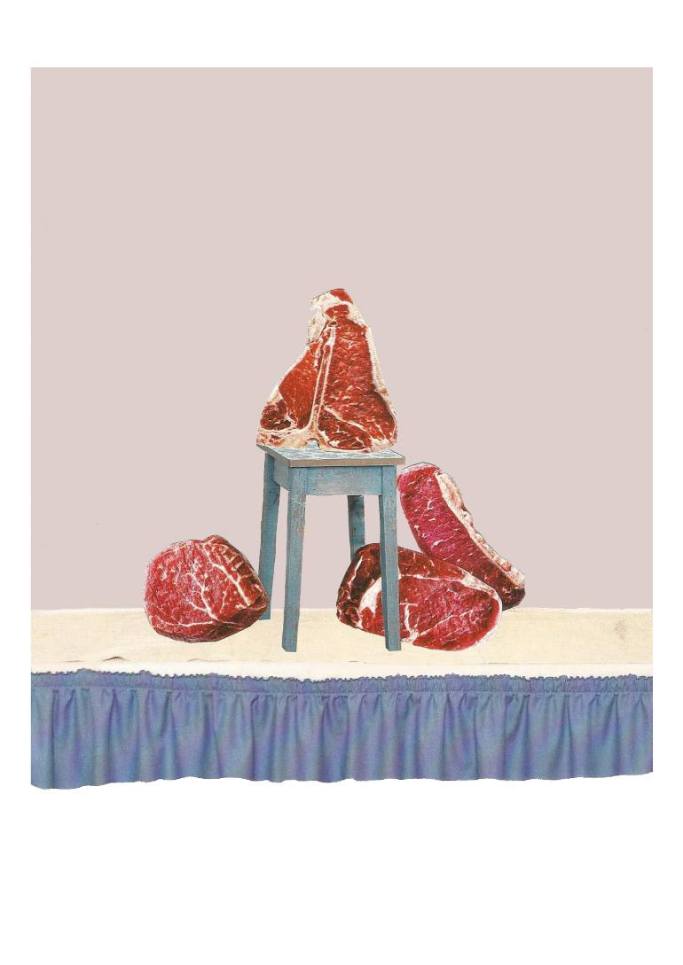
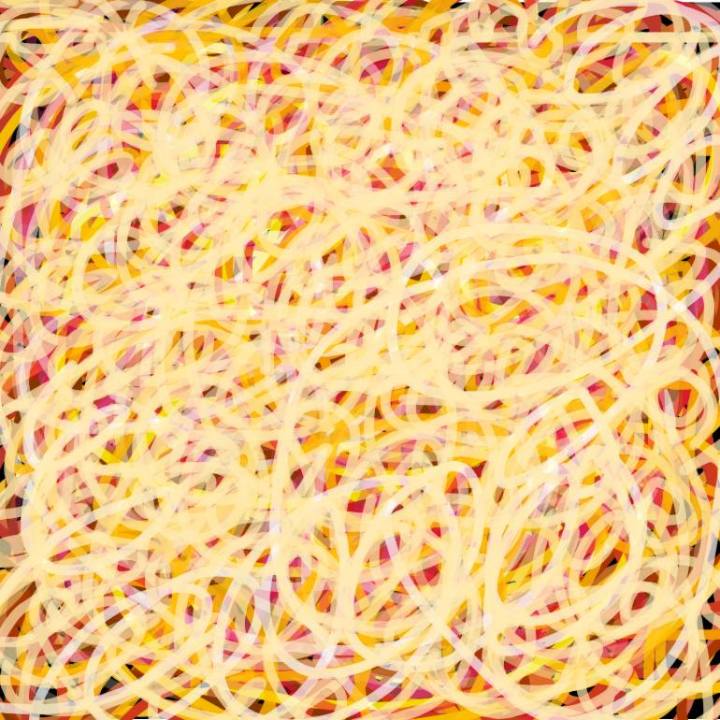
Presents different subjects and new media forms in various styles such as Dada, Pop Art, and Conceptual Art.


2856825-AKIAPESI-7-1
„Meat Still Life“ Katalin Kortmann Jaray giclee print, Digital and collage on Paper


1155774-7
Still Life of Spaghetti“, Mario Dagrada
Vector on cardboard


References

Anon, Color Harmonies: complementary, analogous, triadic color schemes. Available at: http://www.tigercolor.com/color-lab/color-theory/color-harmonies.htm [Accessed November 1, 2017a].

Anon, Still Life. Available at: http://www.timetrips.co.uk/still_life_history.htm [Accessed November 28, 2017b].

Anon, 2012. THE TECHNIQUE. Impressionist Techniques. Available at: https://impressioniststech.wordpress.com/the-technique/ [Accessed November 27, 2017].

van Gogh, V., Vincent van Gogh Gallery. Vincent van Gogh Gallery. Available at: http://www.vangoghgallery.com [Accessed October 8, 2017].

Rekkali, Z., 2016. Old Masters at Koller: Art and Love, Still Life and Tulip Mania. Mearto. Available at: http://blog.mearto.com/2016/09/14/old-masters-at-koller-art-and-love-still-life-and-tulip-mania/ [Accessed November 28, 2017].
 

Dutch Realist Genre Painters, research Point 4, Pg. 71

Genre Painting

Scenes of everyday life, such as markets, domestic settings, interiors, parties, inn scenes, street scenes, and historical scenes. They may either be realistic or fantasized, but never idealistic.

Characteristics of Dutch realist genre paintings

°Linear perspective

A new way method of composition used as a way of creating the sensation of spatial depth, in which all diminishing parallel lines (called „orthogonals“) converge towards each other and meet at one point; the vanishing point.

°Naturalistic illumination

Brilliant pigments (usually 2 or 3) used to portray the intensity of incoming daylight.

°Pointillès

Dots of thick, light paint that represent specular highlights (areas with mirror-like shine which reflect light)

°Camera Obscura (hypothesised)

A concave viewing lens which reflects the subject onto canvas so the artist may paint/draw without having to move his eyes away from his hand. Often working in the confines of a small space, this would have been instrumental in composing one aspect at a time, with spatial accuracy.

Dutch realist genre painters

°Rembrandt Harmenszoon van Rijn (1606-1669)

Mainly a history and portrait painter, capturing mythological or historical figures in his work. His mediums were oil and printmaking by etching. His greatest abilities were to capture the effects of light and shadow, producing strong contrast to create lively and dramatic scenes.

rembrandt-lucretia
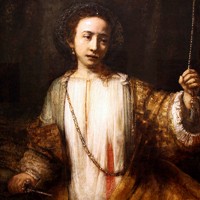
„The Suicide of Lucretia“ Rembrandt (1666)

The above is a historical genre painting of a mythical figure. The subject’s face and body appear three-dimensional with the use of chiaroscuro. The lightness of her face and body seem to illuminate her virtuous and moral nature, while the dark manner of the atmosphere surrounding her enhances intense emotion in her expression.


gettyimages-486780609edit_custom-a421a4ac344d08cc797c79087d743cdbd8aeaae3-s800-c85
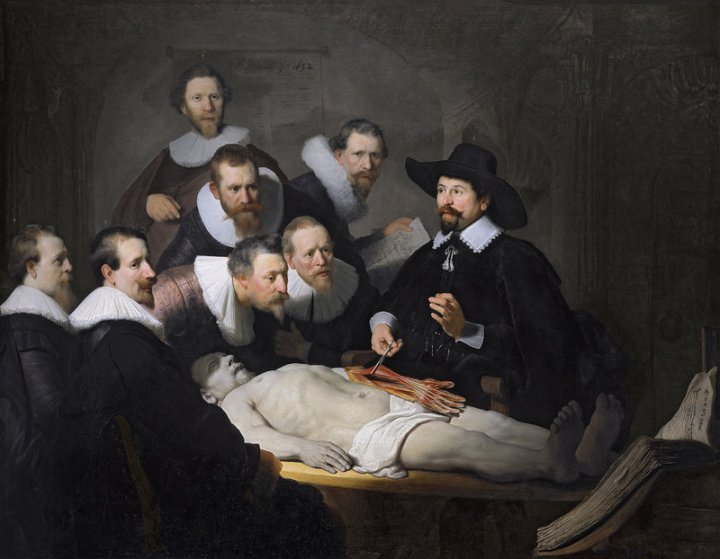
„The Anatomy Lesson of Dr. Nicolaes Tulp“ Rembrandt , 1632

This is an actual scene that was a common public event in the 17th century, often taking place in theatres, used as lecture rooms. Those who attended paid an entrance fee and dressed as if going to play. The corpse is that of an executed criminal, hung that day. Rembrandt uses umbra mortis (shadow of death) here and in many other genre paintings. The viewer’s attention is drawn to Tulp, who demonstrates how the muscles of the arm are attached.

  °Johannes Vermeer (1632-1675)

Worked primarily within the boundaries of a studio, and was devout on creating the illusion of three-dimensional space, rendering the effects of natural light.

vermeer-at-easel
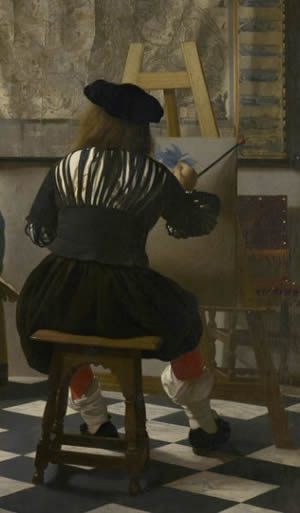
The Art of Painting“ Vermeer, c. 1662-   1668

As in many of Vermeer’s interior paintings, such a this one; the viewer has the impression they are peering at a scene through an illusive door. Here there is an illusion created that a window permeating natural light exists, and illuminates the subject. The subjects back, feet and environment. This light draws the viewer’s attention more to the details of the room, rather than the action of the subject himself, which must be of lesser importance than the floor and the space in which his working. Perhaps this is to impress the viewer upon the relatively small spaces artist’s of this time were confined to.  The light is also emanating from above and to the left; as if he were working from a lowly cellar space.

References

Anon, Genre Painting. Dutch Realism. Available at: http://342154211826700009.weebly.com/genre-painting.html [Accessed November 27, 2017a].

Anon, Suicide of Lucretia, Rembrandt: Analysis, Interpretation. Available at: http://www.visual-arts-cork.com/famous-paintings/suicide-of-lucretia.htm [Accessed November 27, 2017b].

Barbara, J., 2012. The Transcendent Technique of Etching, from Rembrandt to Nanoscience. Forbes. Available at: https://www.forbes.com/sites/julietbarbara/2012/09/20/the-transcendent-technique-of-etching-from-rembrandt-to-nanoscience/ [Accessed November 27, 2017].

Janson, J., Vermeer’s Painting Technique: A Five Part Study. Available at: http://www.essentialvermeer.com/technique/technique_overview.html#.WhwHuyydXfa [Accessed November 27, 2017].

Reference, Famous Genre Paintings by Rembrandt. Ranker. Available at: https://www.ranker.com/list/genre-painting-artworks-by-rembrandt/reference [Accessed November 27, 2017].


Optical effects, research point 3, Pg. 66


The Nature of Human Perception

Colors are the stimulants of perception. Like chemical messages received by the eye, they are carried through the optic nerve and delivered to the brain, the hub of judgment. Here, the brain’s interpretation of what the eye has seen may occur in exceptional ways.

In human vision, there is an independent sense of illumination. Exploitation of this sense gives promise of new modes of colour expression for the future“. – David Katz

Color and Science merge

With books such as “The Principles of Harmony and Contrast of Colors“ (Chevreul, 1839) and new principles drawn from physiological optics (fostered by Helmholtz and Rood) the science of colour applied to art inspired the fundamentals of impressionism.

Fundamentals of Impressionism

°Small visible brushstrokes

°Open composition

°Portrayel of light and it’s changing qualities

°Ordinary subject matter

°Movement

°Unusual visual angles

Impressionists

Inspired by colour theory, impressionists portray their impression of a subject rather than recreating actual details of reality. They shun outline and specifics to create art in a freer form that reflected human perception. They achieved this through a variety of techniques.

Techniques of the Impressionists

Impasto

Application of thick paint layers which eliminates distinctive lines reflecting human perception, rather than a precise depiction of reality. 

Broken Colour

Using the principle that colours mix optically, light layers of colour are painted with the uppermost coats broken to reveal the colour underneath by using:

°Hatching (short linear strokes)

°Cross-hatching (when linear strokes cross)

°Making patterned marks that vary in density

such as; dots (stippling), dry brushstrokes, and sgraffito.

*Thus capturing the effects of light and the form of the object rather than details.

Diffusion and Mixing

Diffusion is a technique which replaces hard lines in paintings by laying colours

side-by-side which are mixed optically. Instead of Black, complimentary

colours are combined to achieve dark values. Instead of glazing, the paint is opaque.

Wet Paint

wet into wet paint is used to diffuse hard lines and mingle colour in order to achieve a three-dimensional effect.  This is also used in impasto.

Effets De Soir and En Plein Air

Painting outdoors and often in the evening when the effects of light and shadows were

more dramatic

Post-Impressionism

Emerged from the opticality of the impressionism movement with new uses of color, pattern, form, and line. This change included such artist’s as Vincent Van Gogh, Paul Gauguin, Georges Seurat, and Henri de Toulouse-Lautrec.

Neo-Impressionism

Brought a new approach to the Impressionists’ interests in light and colour, and created new methods of laying paint using dashes and dots. Its followers focused on modern urban scenes as well as landscapes and seascapes.

The movement, founded by Georges Seurat in the 1880s, included others such as Henri Matisse, Paul Signac, and Camille Pissarro.

Pointillism

A method in which paint is applied as small points or daubs of colour. Based on the laws of colour theory, pointillism depends on the viewer’s eye to mix the dots into the forms, colours, and values of the full scene.

The Pointillists

*Both pointillist artists used the principle of applying colour, known as „melange Optique“ (optical mixture), which is painting dots of pure colour separately on the canvas and allowing the eye to mix them.

Seurat

Was fascinated by the science of colour a well as form and expression. He believed the direction of lines in a painting could depict warmth or coolness. He practised the discovery that complementary colours could mix optically creating much more vivid results, than mixing them on the palette.


350px-Georges_Seurat_-_A_Sunday_on_La_Grande_Jatte_--_1884_-_Google_Art_Project
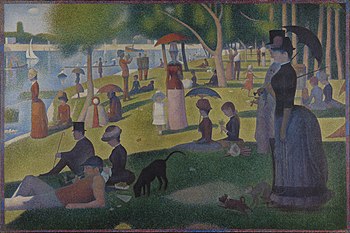
Sunday Afternoon on the Island of La Grand Jatte (1884-86), by Seurat


In the painting above, Seurat uses tiny dots of colour to impress the viewer with a warm, sunny day. With different densities between the dots of colour, he creates a range of values of light and luminosity. Dots of complementary colours allow a natural diffusion between objects, where there would be hard lines in a typical sketch.

Signac

worked with various mediums producing paintings in tiny dots,

and never relied on lines to create form.

“…the separated elements will be reconstituted into brilliantly coloured lights.” -Signac

signac_paul_4
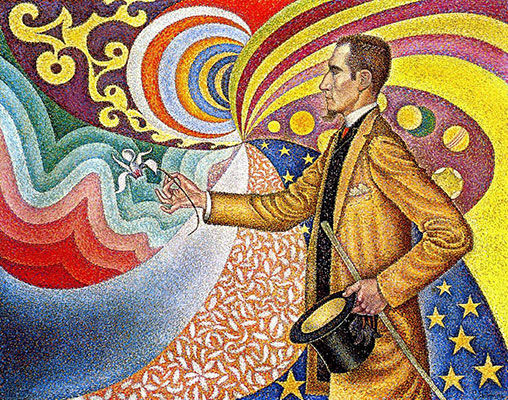
Opus 217, Portrait of M. Félix Fénéon (1890), by Signac

Here Signac uses dots of many colours to create the impression of a single colour through optical mixing.

My Study in Pointillism


IMG_1434
Initial sketch


Pointilism I
Color study


IMG_1435

Second sketch using points of colour and eliminating lines

Op Art Movement (or Optical Art Movement)


Included paintings or sculptures which seem to grow and pulsate through the use of optical effects. The Leading figures of this movement, Bridget Riley and Victor Vasarely, both used patterns and colours in their paintings to achieve a disorientating impact on the viewer.

Bridget Riley

In the 1960’s, this Op artist created geometric paintings of squares, ovals, stripes, and curves to stimulate both physical and psychological responses of the eye. She wanted the viewer to question the reality of what they were seeing. She produced paintings which appeared to be in motion. Her work inspired textile designs and psychedelic posters.

pnt_riley_bridget_2
Movement in Squares (1961), Bridget Riley


References

Anon, Bridget Riley Biography, Art, and Analysis of Works | The Art Story. The Art Story. Available at: http://www.theartstory.org/artist-riley-bridget-artworks.htm [Accessed November 27, 2017a].

Anon, How Impressionists Work, Ways in which Impressionists Paint. Available at: http://www.impressionism.org/pleine.htm [Accessed November 27, 2017b].

Anon, Impressionism Movement, Artists and Major Works | The Art Story. The Art Story. Available at: http://www.theartstory.org/movement-impressionism.htm [Accessed November 27, 2017c].

Birren, F., 1976. Color Perception in Art: Beyond the Eye into the Brain. Leonardo, 9(2), pp.105–110. Available at: http://www.jstor.org/stable/1573116.


Anon, 2012. THE TECHNIQUE. Impressionist Techniques. Available at: https://impressioniststech.wordpress.com/the-technique/ [Accessed November 27, 2017].