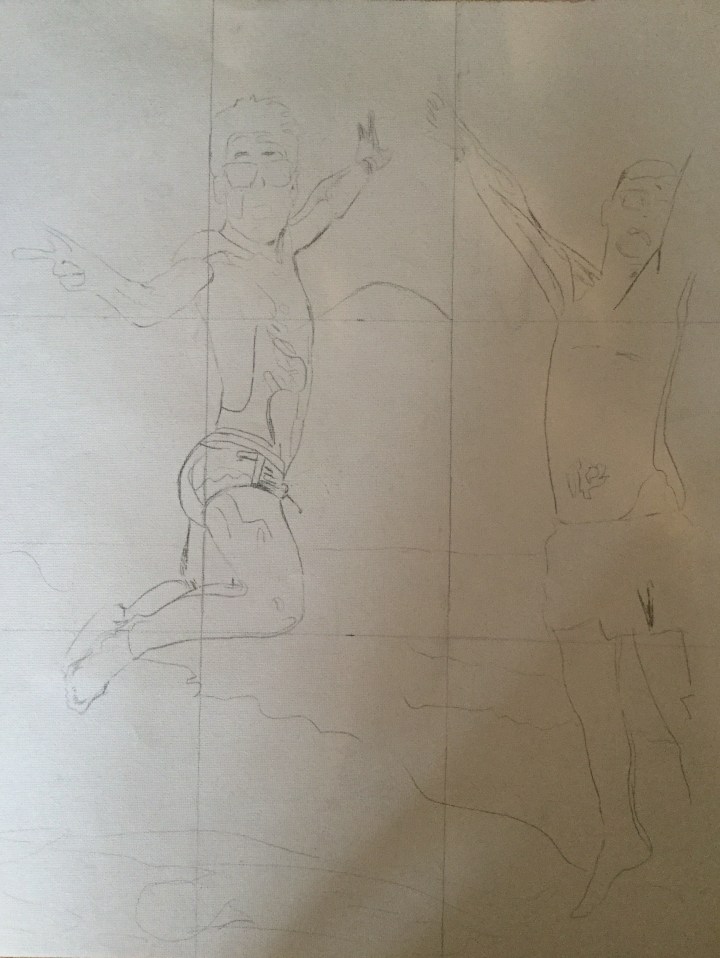
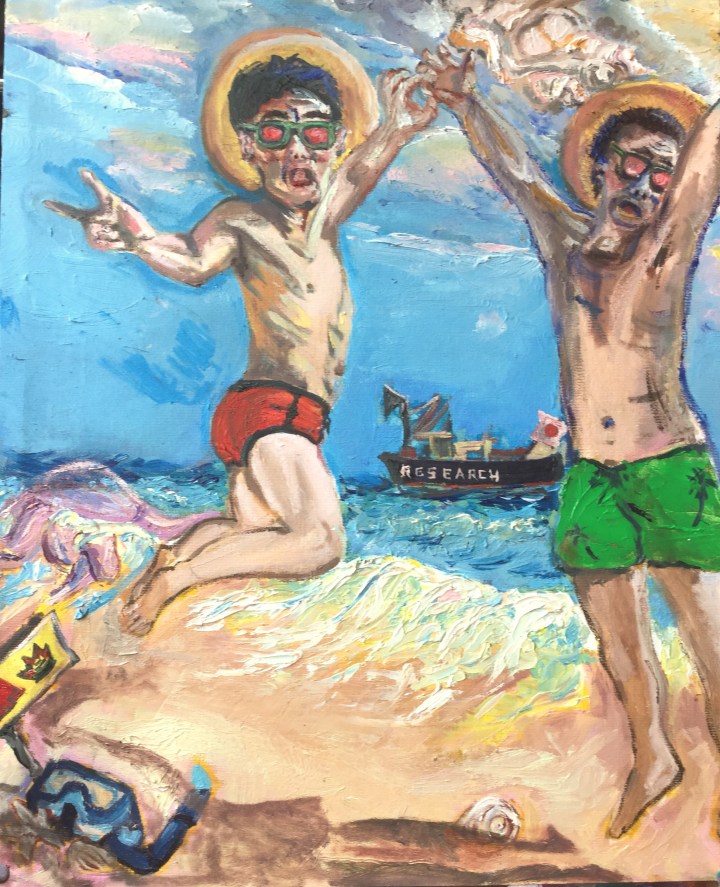
For this exercise, I used all of my resources of colour, tone, shape and line to convey a narrative. I continued in the vibrant palette of the fauvists and only slightly outlined the main characters this time. I felt it may have been overdone in the conveying character exercise. As I know my tendency to add too many distracting details in the background, I began with a simple sketch. The narrative was only going to be “A Day at the Beach”.
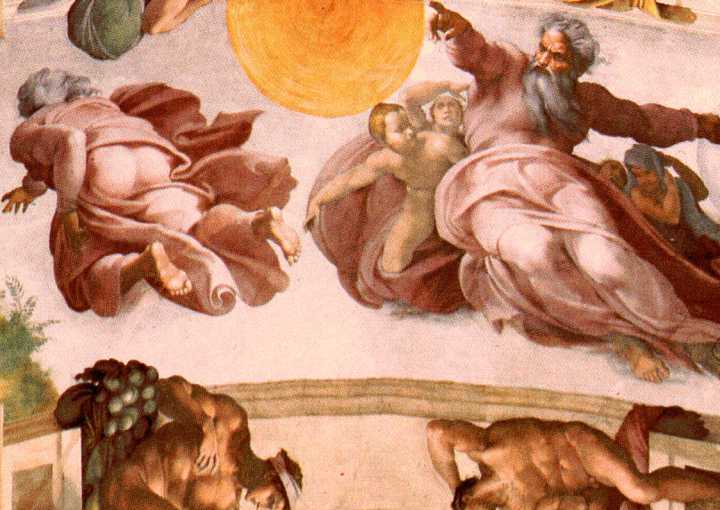
After I painted the main figures and seascape, I found it much too cliche’ and thought it would be improved by some hints of danger. I then painted over most of them, save a few. I decided that I wanted this to be more of a modern-day apocalyptic narrative, with two angels at the beach. I tried to keep the dangerous aspects to a few: A landmine warning sign in the corner, giant jellyfish, Japanese whaling boat, and an impression of Michelangelo’s God flying away showing his bum to all.
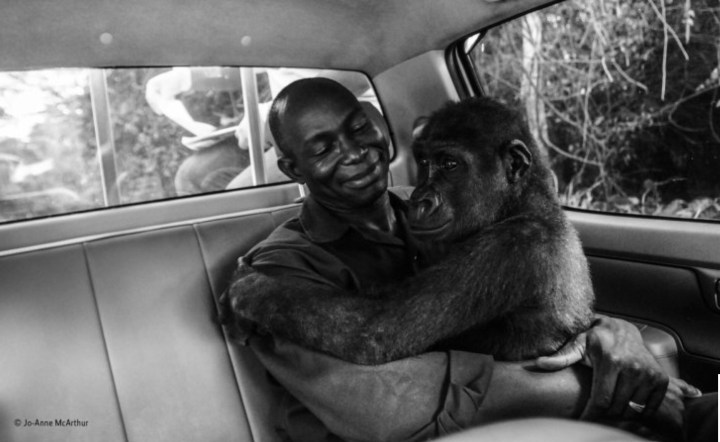
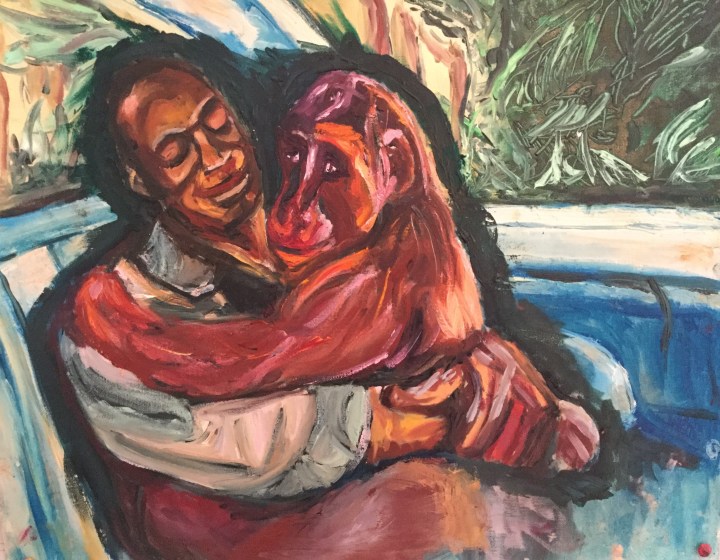
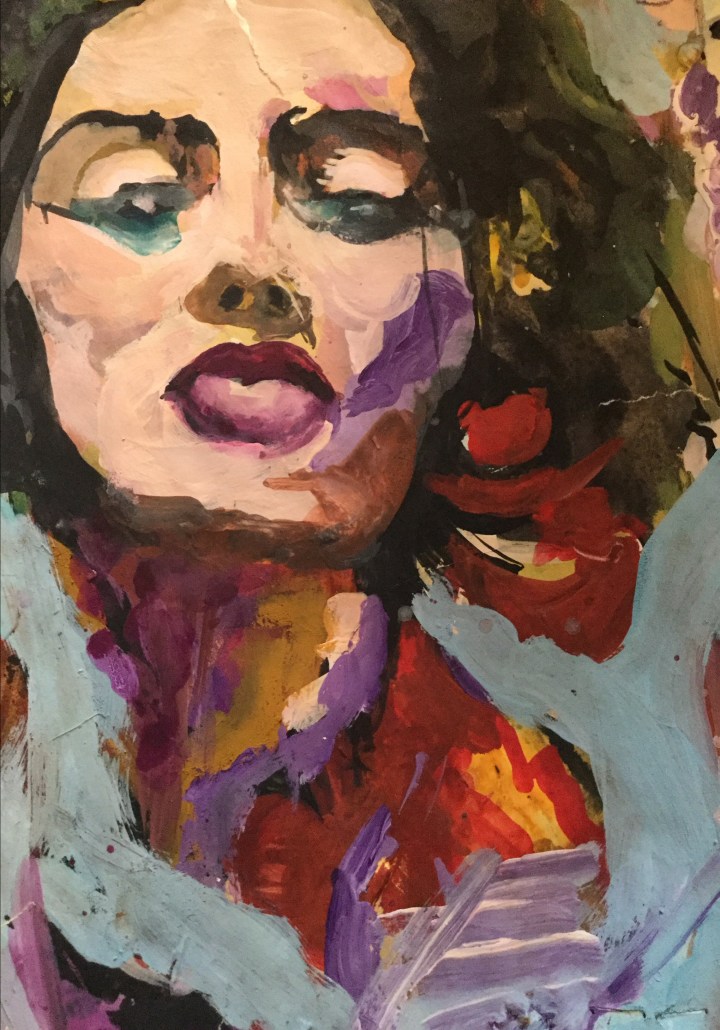
I was inspired by Marlene Dumas’s portrait of ‘The Widow’, and how she recorded a meaningful moment. I like the vibrant colour palette used by fauvist expressionists and decided to use it for this study and the remaining exercises of this coursework. I chose a photo which I’d like to give credit to which I feel captures a momentary expression, impossible to achieve in an all day sitting. Again I wanted to work more with background mark-making as well as experiment with colour. I aimed for a likeness, but not a realist version of the subjects in the photo.
The People’s Choice award in the Natural History Museum’s Wildlife Photographer of the Year competition went to this photo of a lowland gorilla and the man who saved her (Picture: Wildlife Photographer of the Year: Jo-Anne McArthur)
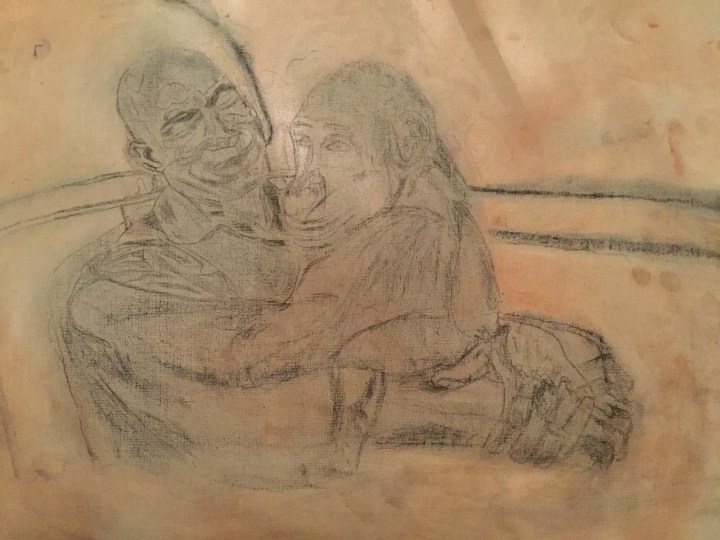
I did a light sketch in pencil and conte:
Then painted wet into wet using the fauvist palette:
When near the end, I outlined the figures in a dark value to distinguish them from the background.
I found it a bit hard to interpret the expression on the man’s face as looks down at the gorilla. Technical issues I encountered with the handling of my paint were the strong fumes from the linseed oil. I had until everyone was in bed so that I could begin working with open windows. may open the windows. After reviewing all the portraits thus far, I found this one required the most time, yet was more successful in conveying what I wanted it too. Perhaps before I was more focused on conveying a mood or getting proportions right.
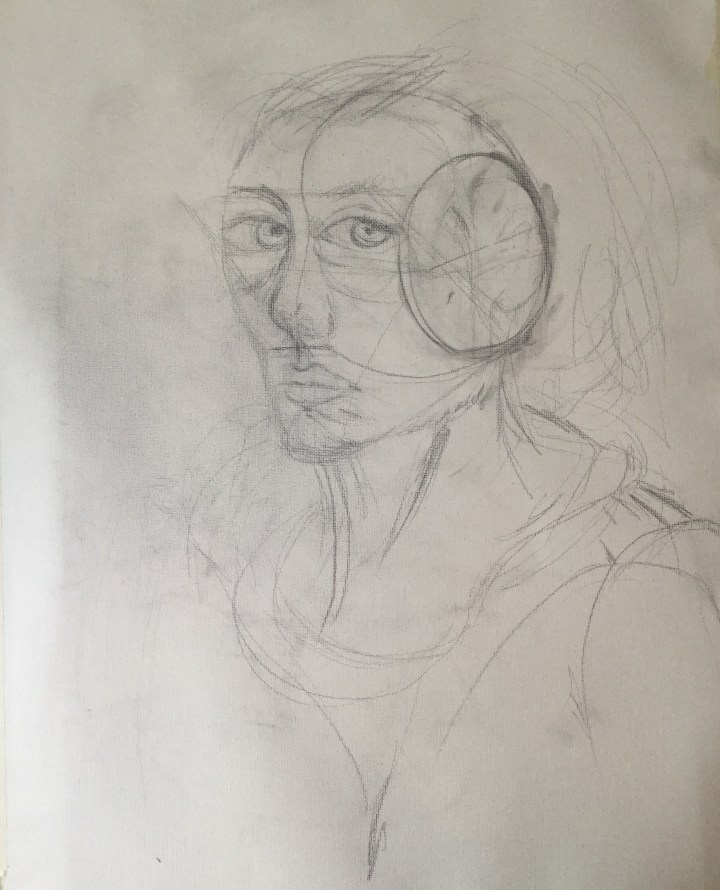
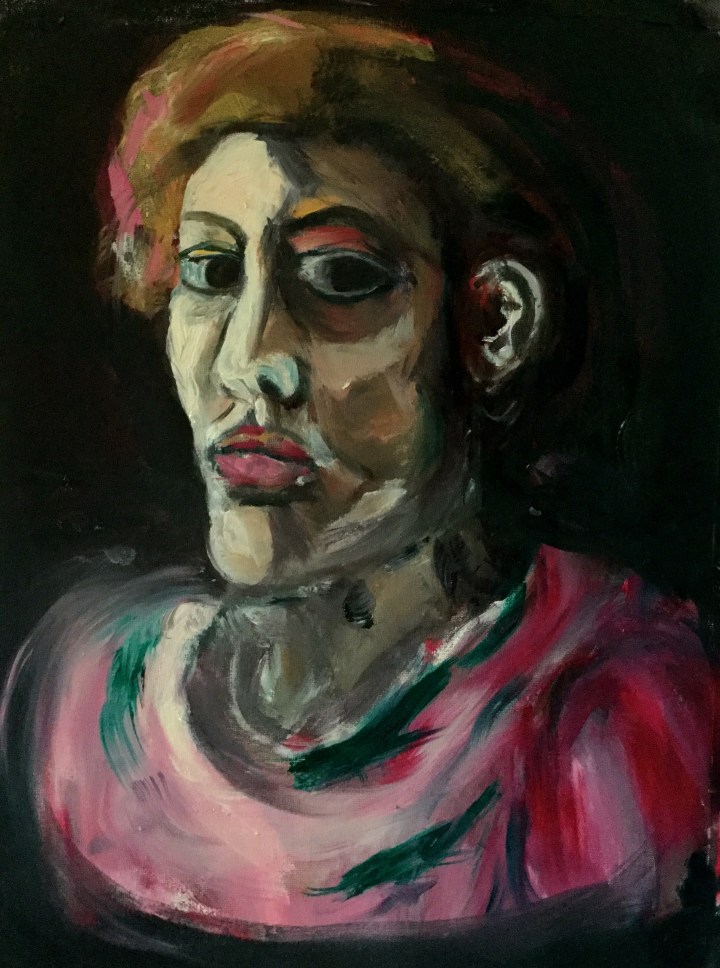
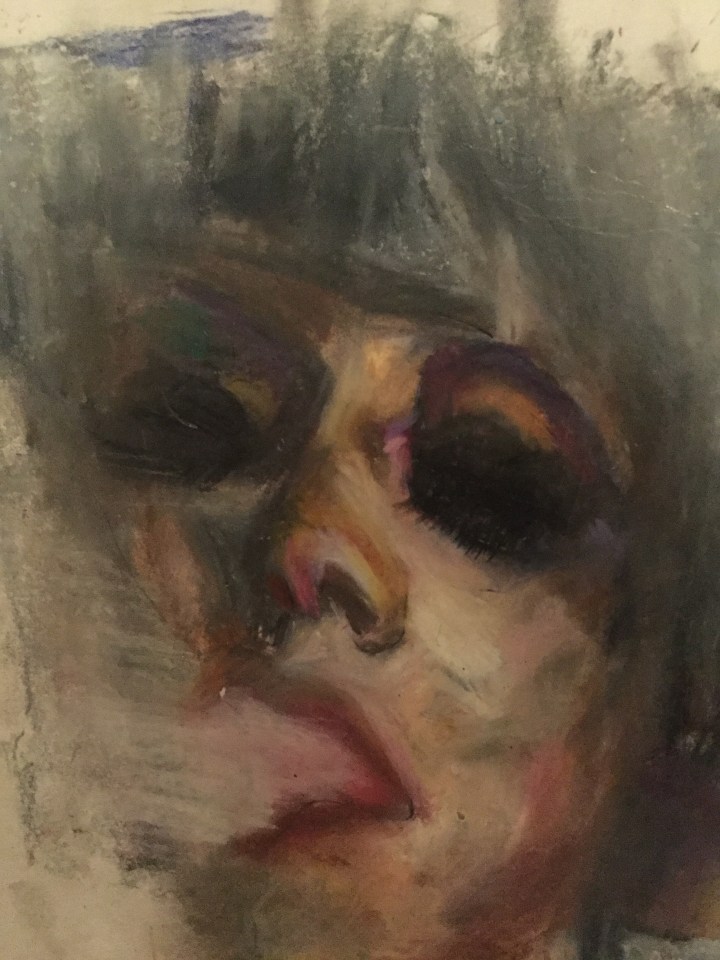
This study I did after the head and shoulder of my model; as I needed to work around his schedule. I found this one particularly hard, perhaps because we all had the flu, and I couldn’t bear looking at myself. I felt a bit used and run around by my family as well. It was challenging adjusting mirrors and light. I used the reverse camera on my computer for the forward glance and a side mirror from the profile glance. Initially, I had natural light but later changed to one artificial light source.
I did the initial outline in pencil, then added in values with charcoal. I sprayed fixative on the canvas. Once dried, I washed the sketch with quinidine red, Acrylic Ink. This alone gave me some great darker values and mid tones. I used a palette of yellow ochre, raw umber, burnt umber, cerulean blue, Cadmium green, flake white and titanium white and cadmium red. I tried to paint as little as possible. I felt the nose, chin and ear hardest to tackle; probably my attempts to repaint them made them grow awkwardly large. Then I had to readjust the size of the eyes to match.
Does it have a likeness to me? More a likeness of how I was feeling. My husband says it has something, says she’s always watching him and he feels judged.
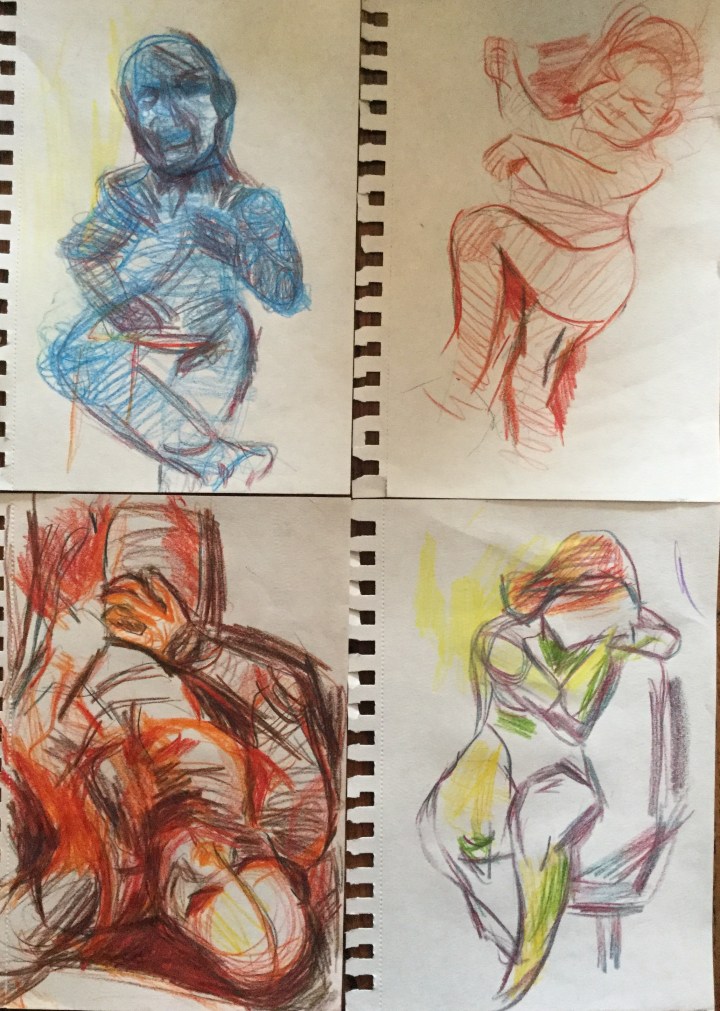
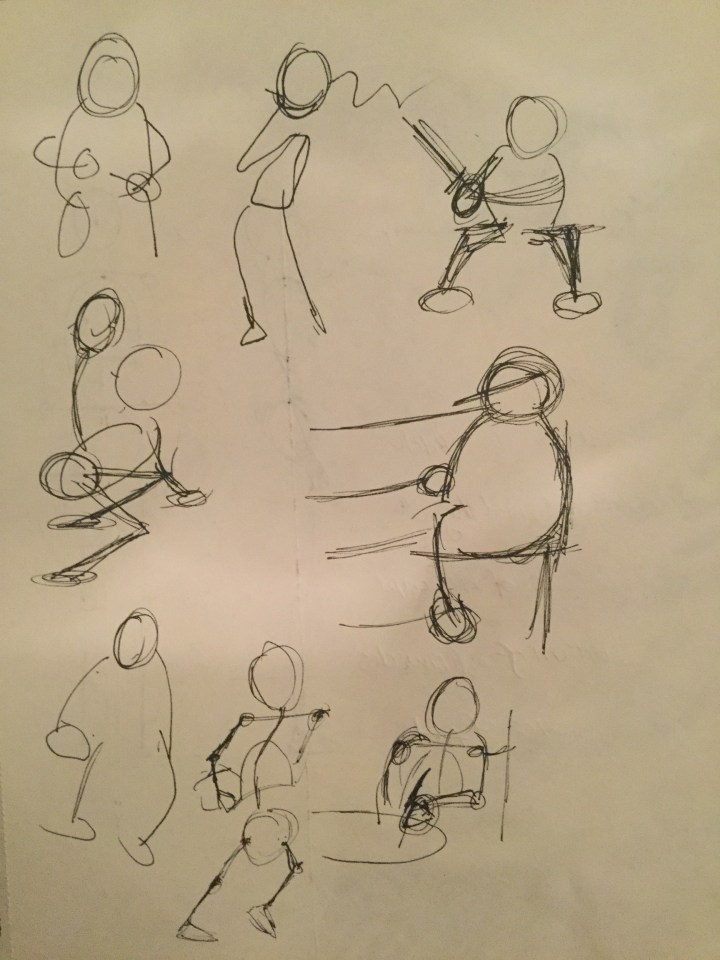
Observing the human figure through a series of sketches
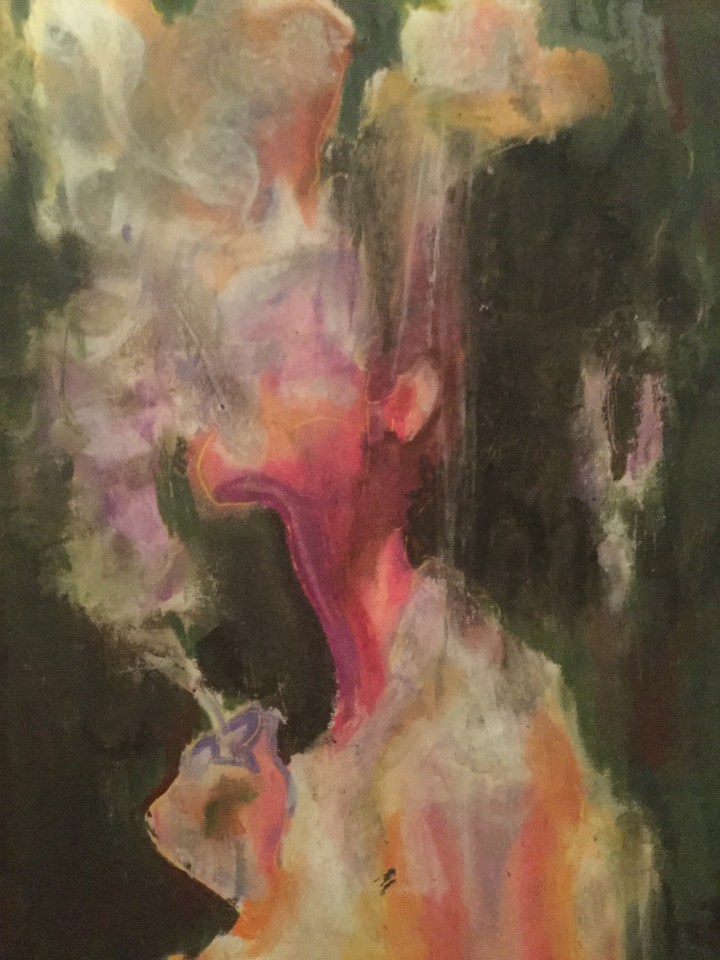
I was able to use my reluctant husband as a model for observing the human figure. I repositioned him several times, which caused him great annoyance. He was uncomfortable with being nude, and the first two paintings reveal this. I used lightly pencilled in grids to get perspectives right and aid in foreshortening. I drew in equal boxes, before outlining him, to keep his body in proportion. Supporting structures, such as a bed, chair, couch and floor helped me assess his size in space. Because he didn’t have thirty-six hours to remain in a stagnant pose, I had to photograph his exact positions so that when time allowed, he could return to them for the subsequent paintings.
A broad spectrum display from Swiss history From Catholicism, Calvinism, The Reformation, to the poverty before WWII and the boost of the banking industry post-WWII.
Poignant achievements in the largest stained glass collection in history, to Lindt artisan chocolates, The Ski industry, watchmaking, and a couple solid contributors to Modern Art.
Modern religious stained glass
The Steinbock (Capricorn), a symbol of Engadiner pride. An animal which still inhabits the Swiss Alps
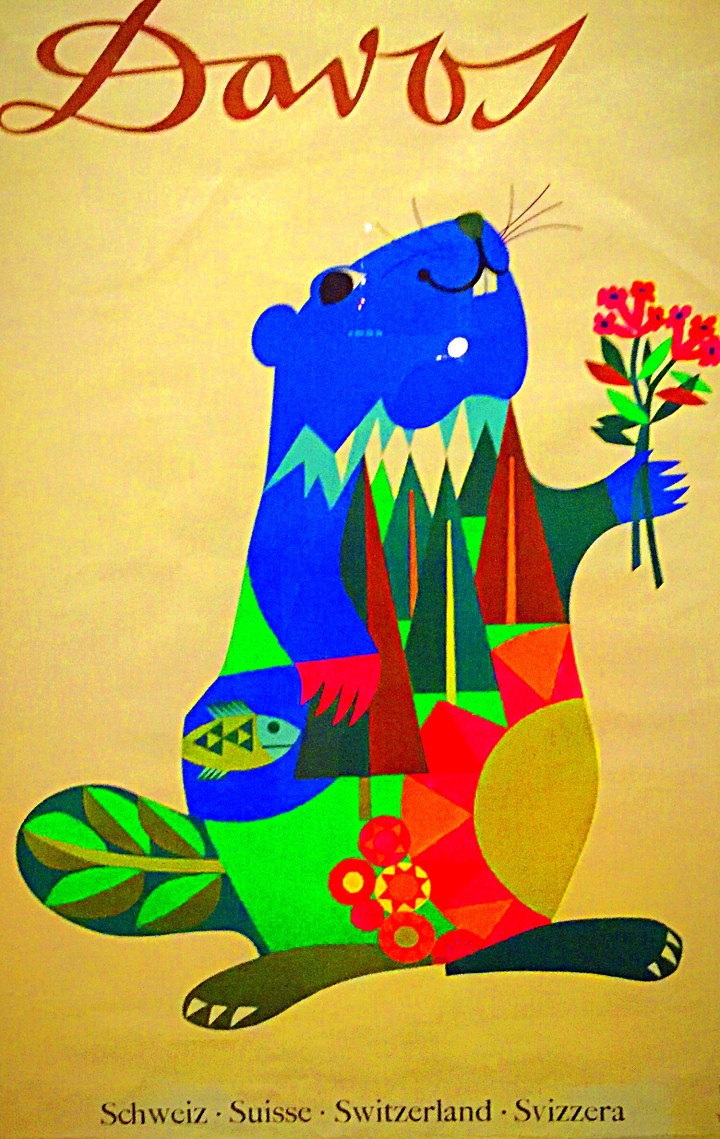
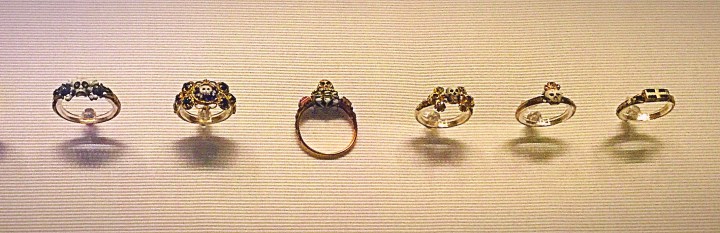
One of many colourful lithography pieces advertising a ski resortAn embarrassing history of child slave labour pre-WWII… Post- WWII: Look! now we have so much gold we can build banks to house all the wealth we’ve stolen.Mourning Jewelry
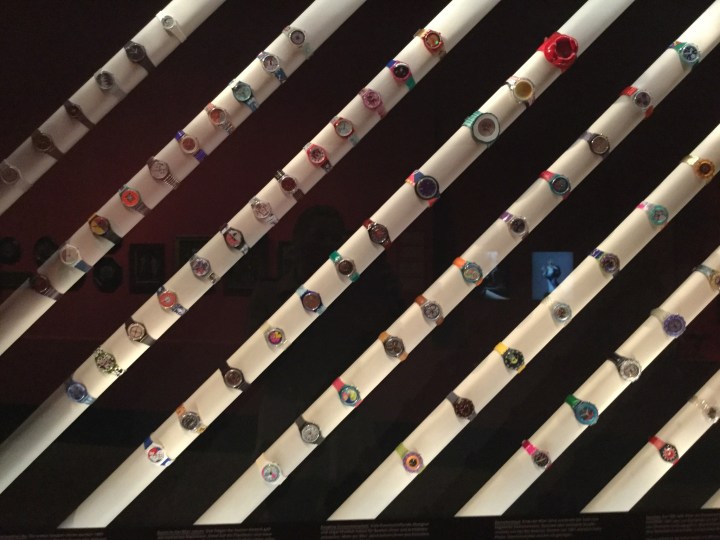
“Swatch” Original Swiss watch…..invented by a Swiss/Lebanese/American Entrepreneur, Nicholas Hayek
Swatch
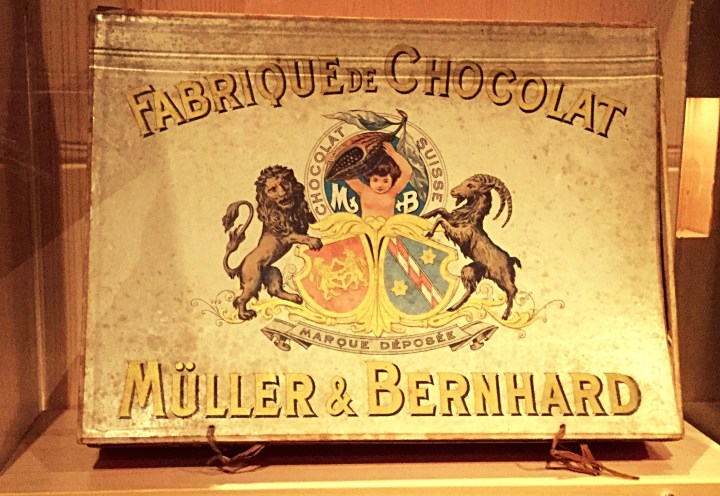
Fabulous Chocolate Factories
One Swiss Modern Artist
that I first learned about at Landes Museum, inspired me to research a bit more, and write about (see the link below):
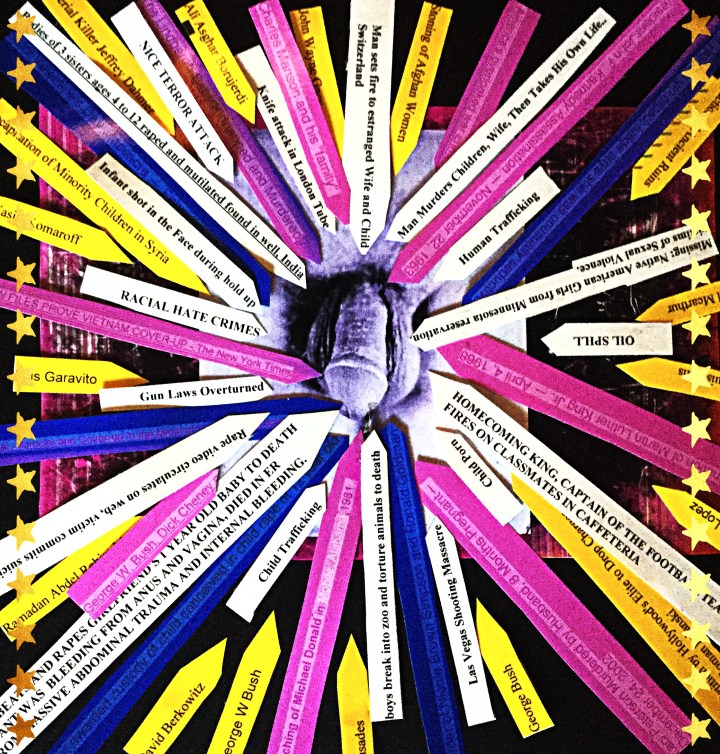
After learning a bit about Dadaism and surrealism; I was inspired to “Create something shocking” and “Say something new”… Not very easy as everything seems to have been said or done thus far. none the less… Here is my collage
Collage inspired by Modern art’s Meret Oppenheim and Dadaism.
The circus in Zürich
keeps it’s animals in a more comfortable home when they are not performing, during the offseason:
Musei Vaticani, The Sistine Chapel and St. Peter’s Basilica
Here I learned about “Fresco” and “Chiaroscuro”. I saw amazing uses of firelight, candlelight and daylight by Artist Raphael, and saw evidence of sarcasm in paintings by the painter/sculptor Michaelangelo, who may have been more of a hostage, than a guest in Vatican city.
Here I learned about “Fresco” and “Chiaroscuro”. I saw amazing uses of firelight, candlelight and daylight by Artist Raphael, and saw evidence of sarcasm in paintings by the painter/sculptor Michaelangelo, who may have been more of a hostage, than a guest in Vatican city.
Creation of the Sun and Stars, Michaelangelo
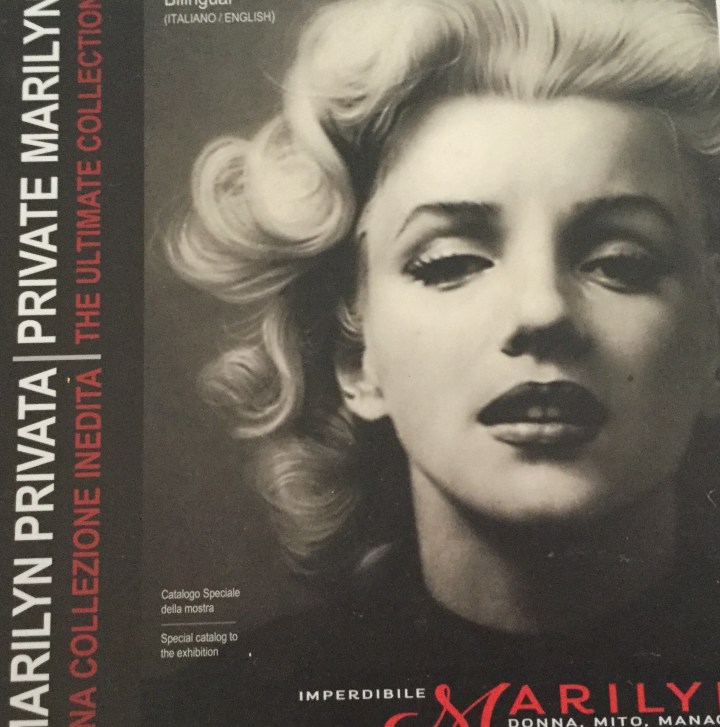
A Catalogue of photographs of Marilyn Monroe
Somehow I found this exhibition very melancholy. A little orphan girl who belonged to no one desperately wanted to be loved by everyone. Though she nearly was, it wasn’t enough to close the aching hole of rejection and loneliness from her infancy, which tainted her relationships, mental health, and perhaps ended her life.
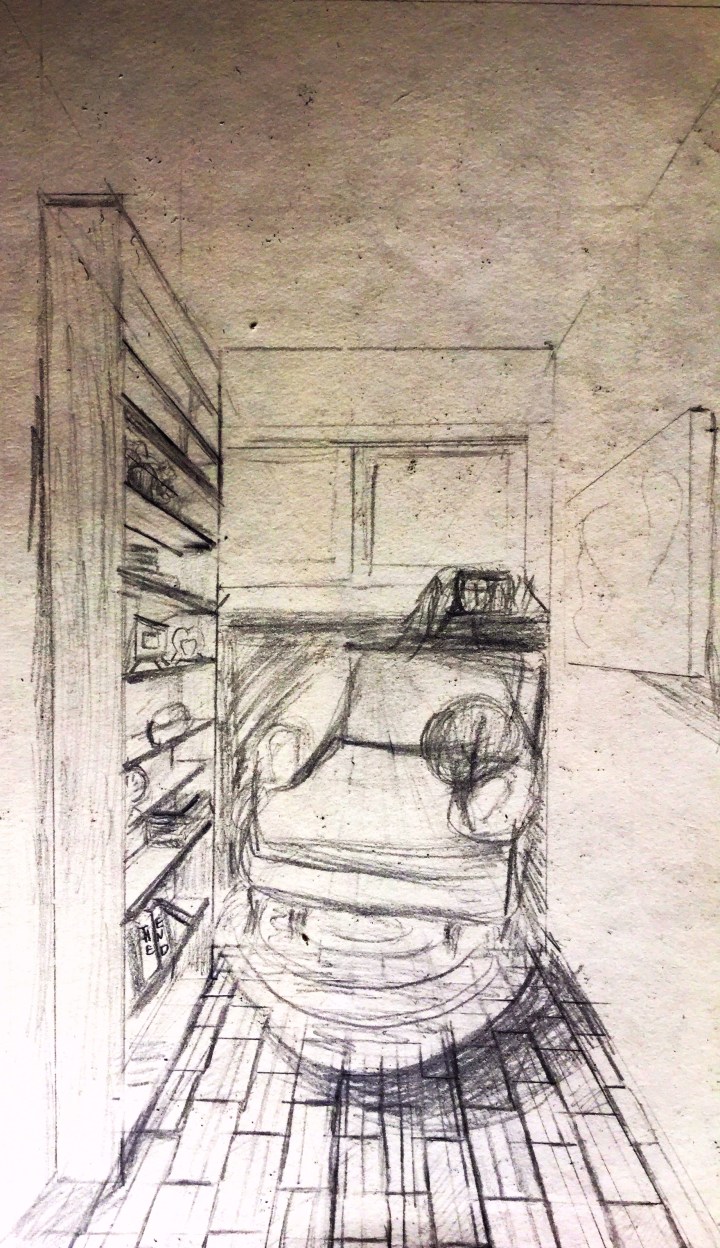
This was by far the most difficult exercise for me. Simple as it may be for others; I am a total beginner at drawing. The two-point perspective rough sketch took me a full day. The drawing in paint took even longer! The paint handling itself felt a bit clumsy, but luckily gouache is forgiving.














 Creative Arts